Family-owned since 1993, with over 30 years of machine tool experience and field service support from Locher’s Ohio and Texas service footprint.
Machine Tool Design & Engineering
Practical machine tool engineering support for repair planning, machine-specific solutions, and production-critical equipment.
EXPERTS IN Machine Tool Design and Engineering
Locher, Inc helps manufacturers solve machine tool problems that require more than a standard repair recommendation. When a machine has a unique configuration, damaged interface, outdated setup, repeated failure, or unclear repair path, Locher can help review the machine and determine a practical next step.
Our design and engineering support is focused on real machine conditions. Locher reviews the machine, symptoms, application, tooling interface, component relationships, and repair history to help determine whether the right path is engineering support, on-site spindle taper grinding, boring mill insert work, spindle rebuilding, headstock repair, #50 CAT conversion cartridge review, calibration, alignment, or another machine-specific solution.
KEEP YOUR MACHINES WORKING IN TOP NOTCH SHAPE
Machine-Specific Engineering Support for Machine Tool Problems
Machine tool design and engineering support helps manufacturers evaluate repair needs, machine modifications, tooling interfaces, component relationships, and production equipment problems that require a machine-specific review.
Locher’s engineering support is practical and repair-focused. The goal is to understand the machine, define the problem, review the constraints, and identify a responsible repair or service path before unnecessary downtime or major disassembly occurs.
This service can be helpful when a machine problem crosses more than one system, such as the spindle, taper, headstock, tooling interface, machine geometry, drawbar system, or boring mill structure.
#1 RATED EXPERTS ACrOSS THE INDUSTRY
Machine Tool Engineering Support for Manufacturers
Locher works with manufacturers that rely on CNC machines, machining centers, boring mills, lathes, and other production-critical equipment. Machine tool design and engineering support is often valuable when the machine problem is unusual, older, modified, difficult to diagnose, or tied to a specific production need.
Locher can help you to review:
- Machine-specific repair planning
- Custom repair-path questions
- Older machine tool support
- Boring mill repair planning
- Tooling interface concerns
- Spindle interface concerns
- Machine modification feasibility
- Component fit or relationship issues
- Repeated machine problems
- Production equipment troubleshooting
- Repair decisions involving the taper, spindle, headstock, alignment, tooling, or geometry
- Engineering input before choosing a rebuild, insert, conversion, alignment, or other repair path
Every machine is reviewed based on its condition, configuration, application, and available inspection details. Locher does not assume a custom engineering solution is needed when a more direct repair path may be more practical.
Practical Engineering for Real Machine Tool Conditions
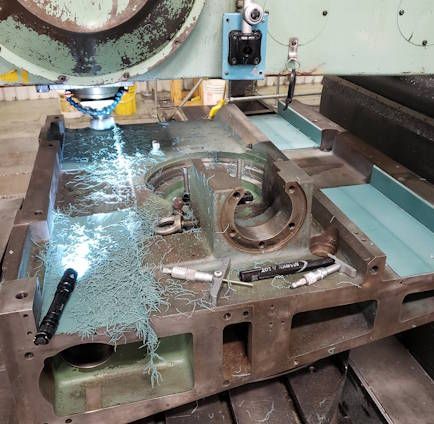
Manufacturers often contact Locher when the machine problem is not simple. A machine may have taper damage, toolholding issues, spindle symptoms, headstock concerns, boring accuracy problems, alignment questions, worn components, outdated interfaces, or prior modifications that affect the next repair decision.
Locher helps review the full machine context before recommending a direction. That can help prevent unnecessary repair work, reduce guesswork, and support a repair path that fits the machine’s condition and production role.
The focus is practical: determine what can be repaired, what should be inspected, what may need to be modified, and what can be verified before the machine returns to production.
Common Machine Tool Design and Engineering Needs
Machine tool design and engineering support may be helpful when the issue involves machine configuration, serviceability, component fit, tooling interface limitations, or repair feasibility.
| Situation | What It May Involve | What Locher Reviews |
|---|---|---|
| Machine problem does not point to one clear service | Multiple systems may be involved | Machine symptoms, history, taper, spindle, headstock, tooling, and alignment clues |
| Older machine needs repair planning | Parts, interfaces, or configuration may limit standard options | Machine make and model, current setup, prior repairs, and serviceability |
| Boring mill has interface or front-end damage | Taper grinding, insert work, headstock review, or engineering support may be needed | Bar or quill condition, taper type, damage severity, geometry, and repair feasibility |
| Prior modifications affect the repair path | Existing changes may affect fit, function, or future service | Photos, drawings if available, current interface, operating symptoms, and repair history |
| Tooling interface limits production | Conversion, taper service, retention review, or another path may be needed | Tooling goals, taper or interface type, clamping setup, and drawbar condition |
| Accuracy issue has several possible causes | Geometry, spindle, taper, tooling, setup, or process may overlap | Machine geometry, spindle/taper clues, process context, and measurement data |
| Repeated machine failures occur | The root cause may not be isolated yet | Service history, replaced components, operating conditions, and maintenance patterns |
Who Needs Spindle Rebuilding Support?
This service is for manufacturers using CNC machines, machining centers, boring mills, lathes, and other production-critical machine tools where spindle performance may be affected by internal mechanical condition. evaluation.
The right recommendation depends on inspection, machine condition, taper type, damage severity, drawbar force, spindle condition, gauge-line relationship, machine geometry, service history, and production symptoms. Locher reviews the available details before recommending a rebuild.
This page is relevant if your machine has:
- Bearing noise
- Spindle heat
- Severe vibration
- Internal spindle wear
- Spindle seizure
- Excessive runout not tied only to taper contact
- Failed seals
- Damaged shafts
- Contamination concerns
- Repeated spindle performance problems
- Damage after a crash or overload
- Problems that remain after taper or toolholding issues are addressed
Note: These symptoms do not automatically confirm that the spindle needs rebuilding. They indicate that the spindle should be evaluated to determine whether the issue is internal, taper-related, alignment-related, toolholding-related, or connected to another machine condition.

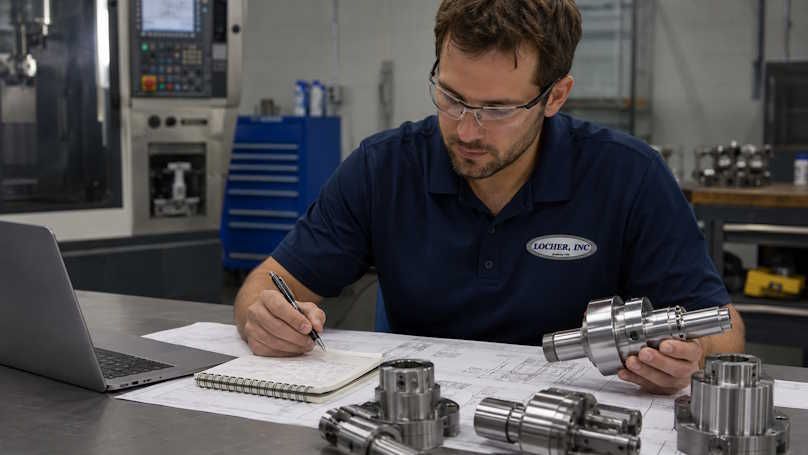
When Machine Tool Design and Engineering May Help
Machine tool design and engineering support may be appropriate when the repair path depends on the machine’s configuration, component relationships, tooling interface, production requirements, or serviceability.
When Machine Tool Design and Engineering May Help
Machine tool design and engineering support may be appropriate when the repair path depends on the machine’s configuration, component relationships, tooling interface, production requirements, or serviceability.
This service may be worth reviewing when:
- The machine has a unique or older configuration
- The problem does not clearly fit one standard repair path
- A boring mill repair requires machine-specific planning
- A tooling or spindle interface needs review
- Prior modifications may affect the next repair
- Component fit or function needs to be evaluated
- The machine has repeated issues after previous repairs
- Taper, spindle, headstock, alignment, tooling, or geometry concerns overlap
- A custom repair approach may be needed after inspection
- The facility needs help comparing practical repair options before committing to teardown, rebuild, insert work, conversion, or alignment
Locher’s recommendation depends on the machine’s condition, available inspection details, production requirements, and whether the proposed repair can be performed and verified responsibly.
When a Direct Repair Service May Be the Better First Step
Not every machine problem requires design or engineering support. If the issue is already isolated to a specific machine condition, Locher may recommend a more direct service review first.
A different repair path may be more appropriate when:
- The issue is concentrated at a recoverable spindle taper
- Tool runout, chatter, poor finish, or sticking tools point to taper contact or toolholder seating
- Bearing noise, heat, or severe vibration points toward internal spindle damage
- The problem involves the headstock assembly, gears, shafts, bearings, or transmission components
- A boring mill spindle bar or quill has localized taper or front-end damage
- The main issue is machine geometry, positioning, squareness, straightness, or repeatability
- Drawbar force, retention knobs, toolholder condition, or maintenance practices are the main concern
- The facility primarily needs gauges, test bars, toolholding components, or product support
Locher can help determine whether the next step should be on-site spindle taper grinding, boring mill replaceable spindle taper insert work, machine tool spindle rebuilding, headstock rebuild evaluation, #50 CAT conversion cartridge review, calibration, alignment, preventative maintenance consultation, product support, or engineering review.
What Locher Reviews Before Recommending an Engineering Path
Before recommending machine tool design or engineering support, Locher reviews the details that define the machine problem, repair constraints, and practical next step.
Helpful review details include:
- Machine make and model
- Machine type
- Taper Size
- Description of the problem
- When the issue started
- Whether the maching is currently down
- Photos or videos if avialable
- Current runout, accuracy, vibration, temperature, or inspection data if available
- Known drawbar, toolholder, spindle, headstock, or alignment concerns
- Facility location
- Desired timing
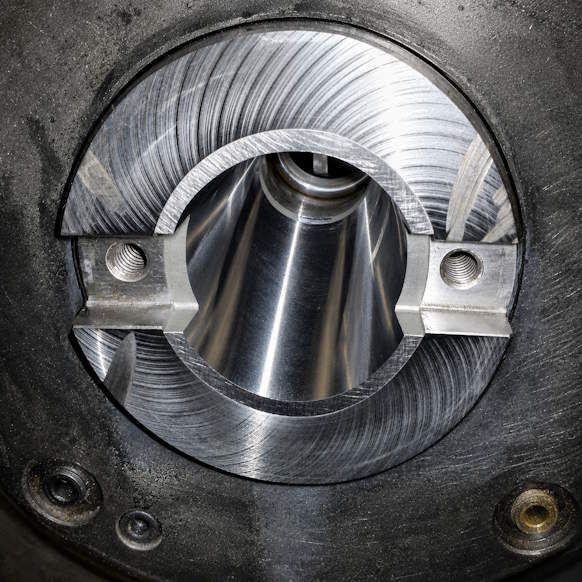
Note: You do not need every detail before contacting Locher. Send us what you have, and we can help determine what else should be reviewed, or if anything else is needed.
How Locher Reviews Machine Tool Design and Engineering Needs
1. Review the Machine and Problem
Locher starts with the machine make and model, machine type, current configuration, symptoms, repair goal, production concern, and any available photos, videos, measurements, or drawings.
2. Identify the Systems Involved
The issue may involve taper contact, spindle condition, headstock components, boring mill geometry, tooling interface, drawbar force, machine alignment, machine structure, or a combination of systems.
3. Review Practical Repair Options
Locher compares the machine condition against available repair paths, including taper grinding, boring mill insert work, spindle rebuilding, headstock repair, #50 CAT conversion cartridge review, calibration, alignment, preventative maintenance, product support, or engineering review.
4. Evaluate Feasibility and Constraints
The practical path depends on machine design, access, condition, available information, application requirements, damage severity, geometry, tooling interface, and whether the repair can be verified responsibly.
5. Recommend the Next Step
Locher may recommend a direct service, additional inspection, measurement review, photo review, engineering review, machine evaluation, or a different repair path if design support is not the right first step.
What May Be Verified During or After Engineering Support
Verification depends on the machine, project scope, repair path, and application. Depending on the work, Locher may review:
A review may include the following:
- Machine configuration
- Component fit or relationship
- Tooling interface condition
- Taper or spindle interface concerns
- Headstock or spindle-related conditions
- Machine geometry or alignment clues
- Drawbar or retention concerns
- Test-bar runout or setup behavior, when relevant
- Serviceability of the proposed repair path
- Whether follow-up taper, spindle, headstock, alignment, insert, conversion, product, or maintenance support should be reviewed
Note: Measured results and project outcomes depend on machine condition, repair scope, components, tooling, setup, application, and verification requirements.
Related Machine Tool Repair Services and Products
Machine tool design and engineering support often connects to Locher’s repair, inspection, and machine tool product capabilities.
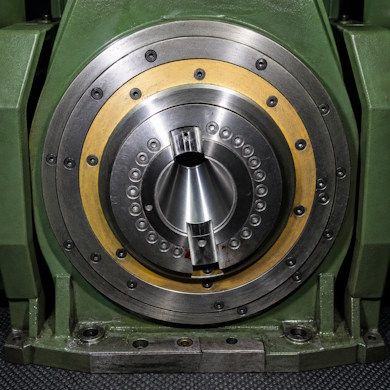
Machine Tool Spindle Rebuilding
If the issue is concentrated at taper contact, toolholder seating, galling, bellmouthing, or spun-tool material transfer, on-site spindle taper grinding may be reviewed before assuming a full rebuild is needed.
On-site Spindle Taper Grinding
If the machine is a horizontal boring mill with taper, spindle bar, quill, or front-end damage beyond ordinary correction, Locher may evaluate whether a replaceable spindle taper insert is a practical repair path.
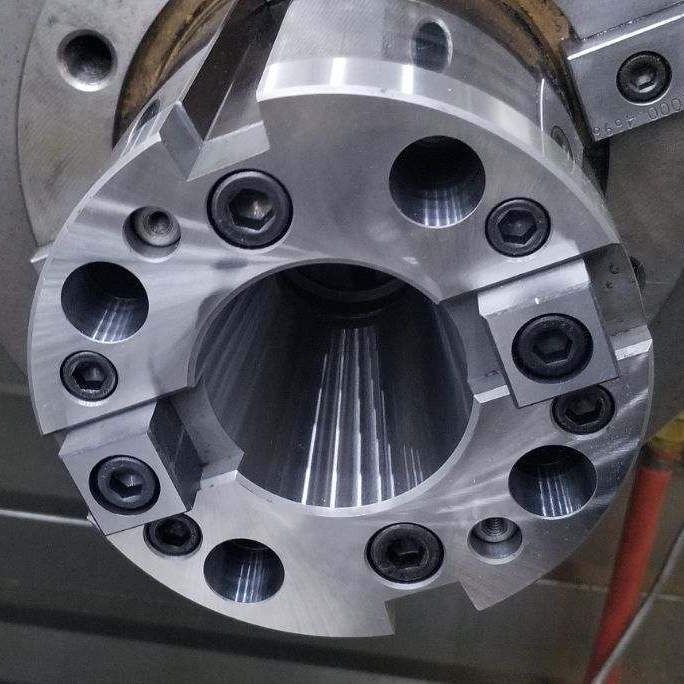
Boring Mill Replaceable Spindle Taper Inserts
If symptoms point beyond the spindle and into shafts, gears, bearings, transmission components, or the headstock assembly, a headstock rebuild evaluation may be more appropriate.
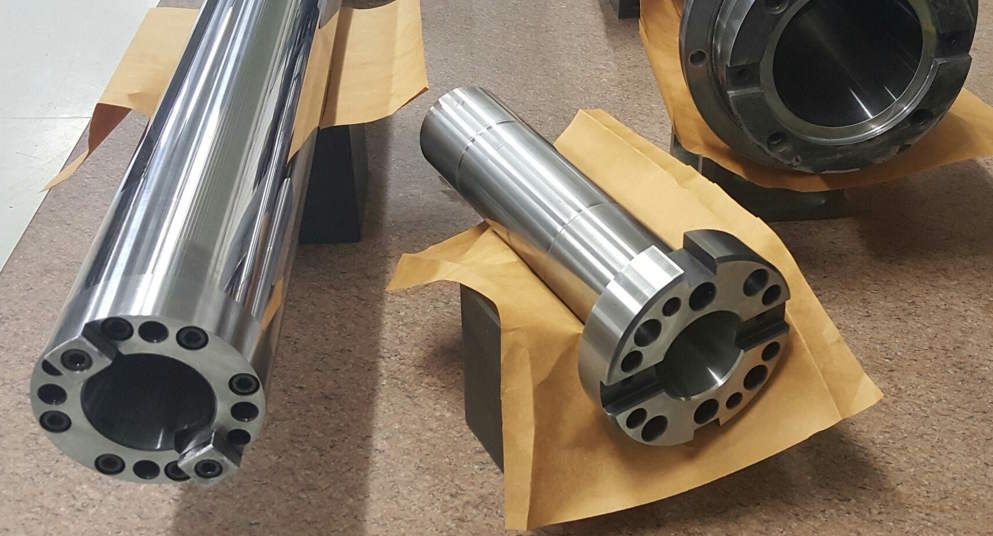
#50 CAT Conversion Cartridges
If the issue involves part accuracy, positioning, squareness, repeatability, or machine geometry, calibration and alignment may need to be evaluated along with spindle condition.
Drawbar Retention Force Gauges
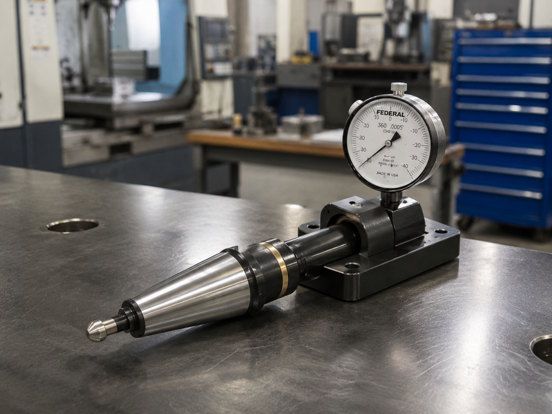
Drawbar force should be reviewed when toolholder movement, fretting, poor seating, release problems, or repeat taper damage may be part of the issue.
What Locher Reviews Before Recommending an Engineering Path
Before recommending machine tool design or engineering support, Locher reviews the details that define the machine problem, repair constraints, and practical next step.
Review may include:
- Machine make and model
- Machine type and headstock configuration
- Symptoms and when they occur
- Headstock noise, heat, vibration, or performance observations
- Speed range where the issue appears
- Whether symptoms appear at startup, under load, at certain speeds, or continuously
- Crash, overload, or repair history
- Lubrication or contamination concerns
- Spindle condition and taper condition
- Transmission, gear, shaft, bearing, or electronic clues
- Machine accuracy or alignment symptoms
- Current measurement or inspection data, if available
- Whether headstock removal is required
- Whether the customer or Locher will remove the headstock
- Whether shop-based teardown and inspection are needed
- Facility location
- Desired timing
Note: Not every detail is required before contacting Locher. Send what is available, and Locher can help determine what else should be reviewed.
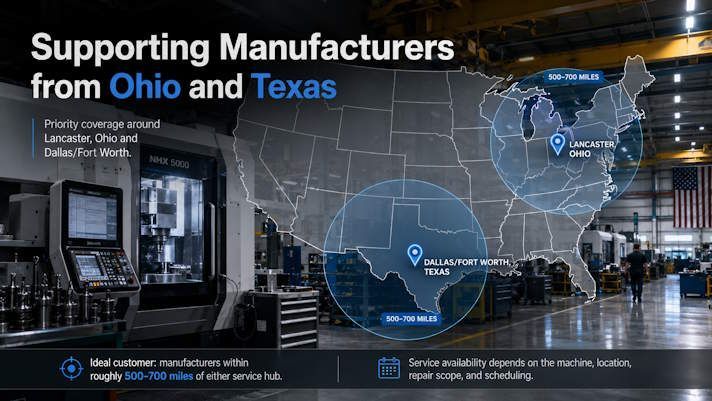
Machine Tool Design and Engineering Support From Ohio and Texas
Machine Tool Design and Engineering Support From Ohio and Texas
Locher supports manufacturers from its Ohio and Texas base of operations.
Locher covers all manufacturers from every corner of industry, fully Nationwide. From Aerospace, to Automotive, to Gas & Oil, or your local job shop. We can help.
Send Us Your Facility Location and Machine Details
below:
What to Send for a Calibration or Alignment Review
You do not need every detail before contacting Locher. Send what you have, and Locher can help determine what else should be reviewed.
Helpful Details to Include
- Machine make and model
- Machine type and configuration
- Description of the problem or project goal
- What repair, modification, or design question is being considered
- Current taper, spindle, tooling, headstock, or alignment concerns
- Current tooling system or interface
- Photos or videos of the machine or problem area
- Current measurements, inspection notes, or drawings, if available
- Prior modification or repair history
- Crash, overload, move, installation, or service history
- Production impact or downtime concern
- Facility location
- Desired timing
These details help Locher evaluate whether machine tool design and engineering support, on-site spindle taper grinding, boring mill insert work, spindle rebuilding, headstock repair, #50 CAT conversion cartridge review, calibration, alignment, preventative maintenance, or another repair path should be reviewed. Give us a call to request a free quote or Submit your details in the quote from below.
Locher, Inc QUOTE FORM
Contact Us
Thank you for reaching out to contact us. We understand the urgency of our customer's service related inquiries and will review your email ASAP. Please allow us up to 24 hours to follow-up. We will get back to you as soon as possible.
If this is extremely urgent or an emergency request, please give us a call @ 800-956-2437. We will get back to you as soon as possible.
Ouchhh.... Technology is great when it works, right? Sorry about that... it seems our system's hit a snag and we'll work to resolve the error! In the meantime, please give us a call @ 800-956-2437 so we can help you!
Please feel free to check back later....
Expert machine tool design and engineering with over 30 years of Experience
Frequently Asked Questions
What is machine tool design and engineering support?
Machine tool design and engineering support helps manufacturers evaluate machine-specific repair needs, modification questions, tooling interface concerns, component relationships, and production equipment problems that may not fit a simple repair category.
When should I contact Locher for design or engineering support?
Contact Locher when the machine has a unique configuration, prior modifications, repeated problems, unclear repair options, tooling interface questions, or a repair need that involves more than one machine system.
Is this service only for custom machine modifications?
No. Machine tool design and engineering support can also help with repair planning, feasibility review, component relationship review, tooling interface concerns, serviceability questions, and choosing the right repair path.
Can Locher help decide between repair options?
Yes. Locher can help review whether the next step should be on-site spindle taper grinding, boring mill insert work, spindle rebuilding, headstock rebuild evaluation, #50 CAT conversion cartridge review, calibration, alignment, preventative maintenance, product support, or design and engineering review.
What if the problem is actually a spindle taper issue?
If the issue is concentrated at the spindle-toolholder interface, Locher may review whether on-site spindle taper grinding is the more direct repair path. Runout, chatter, sticking tools, poor finish, and toolholder seating problems can have multiple causes, so the machine should be evaluated before choosing a path.
What if the problem involves an older boring mill?
Older boring mill problems may involve the spindle taper, spindle bar, quill, headstock, tooling interface, machine geometry, or prior modifications. Locher can help review whether the next step should be insert work, taper grinding, headstock repair, conversion cartridge review, alignment, or engineering support.
What information should I send for a design or engineering review?
Send the machine make and model, machine type, description of the problem or project goal, photos or videos, current measurements or drawings if available, prior modification or repair history, facility location, and desired timing. Partial information is fine.
Does Locher serve my area?
Locher supports manufacturers from its Ohio and Texas base of operations.
Locher covers all manufacturers from every corner of industry, fully Nationwide. From Aerospace, to Automotive, to Gas & Oil, or your local job shop. We can help.
If you want to know for sure if we service your area, send us a message or give us a call!
Need Machine Tool Design or Engineering Support?
If your machine problem does not fit one standard repair path, or if you need help evaluating a machine-specific repair, modification, tooling interface, boring mill concern, spindle issue, headstock issue, alignment question, or production equipment problem, Locher can help review the next practical step.
Send Locher your machine details, photos or videos, project goal, facility location, prior repair history, and any available measurements or drawings. A technician can help review whether machine tool design and engineering support, spindle taper grinding, boring mill insert work, spindle rebuilding, headstock repair, #50 CAT conversion cartridge review, calibration, alignment, preventative maintenance, or another path should be considered.
Project Gallery: INSERT REAL CUSTOMER TESTIMONIALS HERE - Machine Tool Design and Engineering

Spindle Rebuild Completion

Headstock Restoration

Precision Grinding Projects
Get in Touch
Contact Locher, Inc for Machine Tool Design and Engineering Services
Reach out to schedule a consultation or request detailed information about our Machine Tool Design and Engineering Services, #50 CAT Conversion Cartridges, headstock rebuilding, spindle rebuilding, grinding, and machine maintenance solutions.
Business Hours
Email us: 4info@locher.com
Call Us Toll Free @ 800-956-2437
Business Hours
- Mon - Fri
- -
- Sat - Sun
- Closed